
Traveling to Europe is exciting, but one thing you shouldn’t skip is travel insurance. Whether you’re applying for a Schengen visa or just want peace of mind during your trip, the right travel insurance policy can save you from massive medical bills, trip disruptions, and unexpected losses. This guide breaks down exactly what Europe travel insurance covers, what it typically excludes, and how to choose the best plan for your trip.
Why You Need Travel Insurance for Europe
If you’re visiting any of the 27 Schengen Area countries, travel insurance isn’t optional — it’s a mandatory requirement for your visa application. Beyond the visa requirement, Europe’s healthcare system can be extremely expensive for foreign visitors without coverage, making insurance a smart investment regardless of destination.
What Travel Insurance for Europe Covers
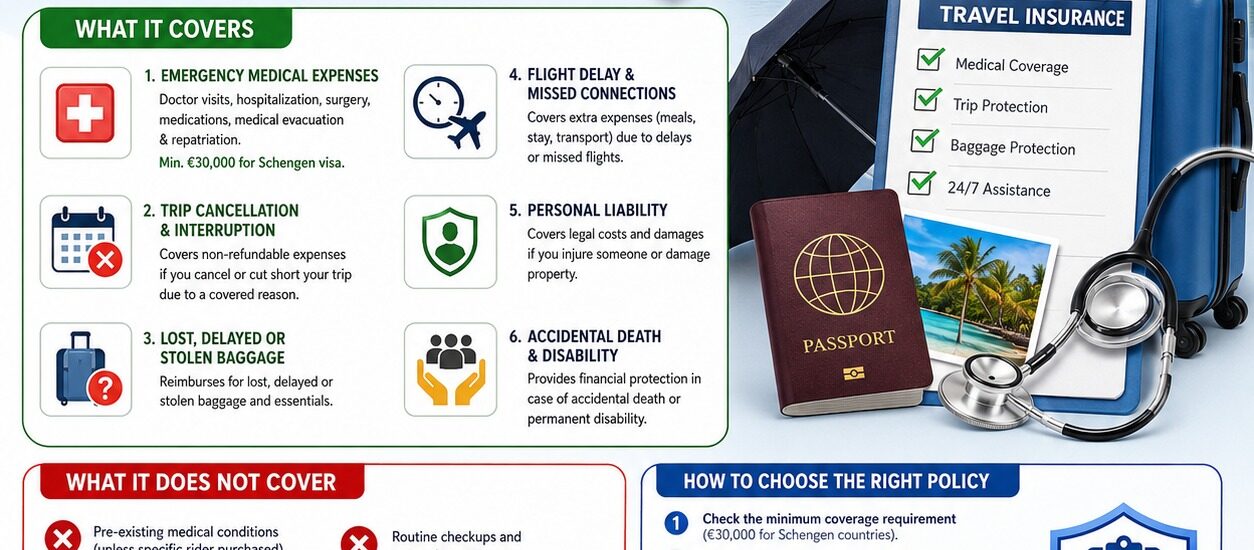
1. Emergency Medical Expenses
This is the core of any Schengen-compliant policy. It covers:
- Doctor visits and hospitalization
- Emergency surgery
- Prescription medication during a medical emergency
- Medical evacuation or repatriation to your home country
Most Schengen visa applications require a minimum medical coverage of €30,000.
2. Trip Cancellation and Interruption
If you have to cancel or cut short your trip due to a covered reason (illness, family emergency, natural disaster), this covers your non-refundable expenses like flights and hotel bookings.
3. Lost, Delayed, or Stolen Baggage
Reimburses you for baggage that’s lost, delayed, or stolen during your trip, including cash needed to buy essentials while you wait for delayed luggage.
4. Flight Delay and Missed Connections
Covers additional expenses (meals, accommodation) if your flight is delayed or you miss a connecting flight due to circumstances beyond your control.
5. Personal Liability
Covers legal costs and damages if you accidentally injure someone or damage property while traveling.
6. Accidental Death and Disability
Provides a payout to you or your beneficiaries in case of accidental death or permanent disability during the trip.
What Travel Insurance for Europe Does NOT Cover
Knowing the exclusions is just as important as knowing the coverage. Common exclusions include:
- Pre-existing medical conditions — Most standard policies exclude conditions you had before buying the policy, unless you buy a specific pre-existing condition rider.
- Adventure sports — Activities like skiing, scuba diving, or mountaineering are often excluded unless you add an adventure sports add-on.
- Travel against government advisories — If you travel to a region under an official travel warning, claims may be denied.
- Self-inflicted injuries or intoxication-related incidents — Injuries caused under the influence of alcohol or drugs are typically not covered.
- Routine checkups and cosmetic treatment — Insurance only covers emergencies, not planned or elective medical care.
- Trip cancellation for vague reasons — “Changed my mind” doesn’t qualify; cancellation must be for a covered, documented reason.
- Valuables left unattended — Baggage claims are often denied if items were stolen from an unattended bag or vehicle.
How to Choose the Right Policy
- Check the minimum coverage requirement for your destination (€30,000 for Schengen countries).
- Compare medical coverage limits — higher is safer, especially for older travelers.
- Look for COVID-19 and pandemic coverage, which some older policies still exclude.
- Read the exclusions list carefully, not just the coverage highlights.
- Check the claim process — look for insurers with a simple, fast, and well-reviewed claims process.
- Add riders if needed — such as adventure sports, pre-existing conditions, or higher baggage limits.
Final Tips
- Buy your policy as soon as you book your trip, not last minute — some benefits like trip cancellation only apply if purchased early.
- Always carry a printed and digital copy of your insurance certificate; it’s required for Schengen visa applications and can be requested by border officials.
- Save your insurer’s emergency helpline number in your phone before you travel.
Conclusion
The right travel insurance for Europe protects you from expensive medical emergencies, trip disruptions, and lost belongings — and it’s a mandatory part of your Schengen visa application. Compare policies carefully, understand the exclusions, and choose a plan that matches how you’re actually traveling.