
The 5 Most Dangerous Countries in the World: A Look at Regions Facing Serious Security Challenges
According to many studies and surveys, safety and security are fundamentally important to people’s overall quality of life throughout the world. In many areas of the globe, citizens can live their lives being able to pursue an education, work, travel, and participate in their daily lives without a constant concern for their personal safety. In some regions, however, continuous conflict, unstable governments, terrorism, and substantial crime present significant challenges to the local populations in how they live their daily lives.
While each country has at least some areas where it is less safe than other areas, numerous nations continue to face major challenges in protecting millions of people from violence, conflict, and instability. This article will identify and compare 5 countries that regularly have been identified as having issues related to concerns for security resulting from turmoil, violence, or instability.
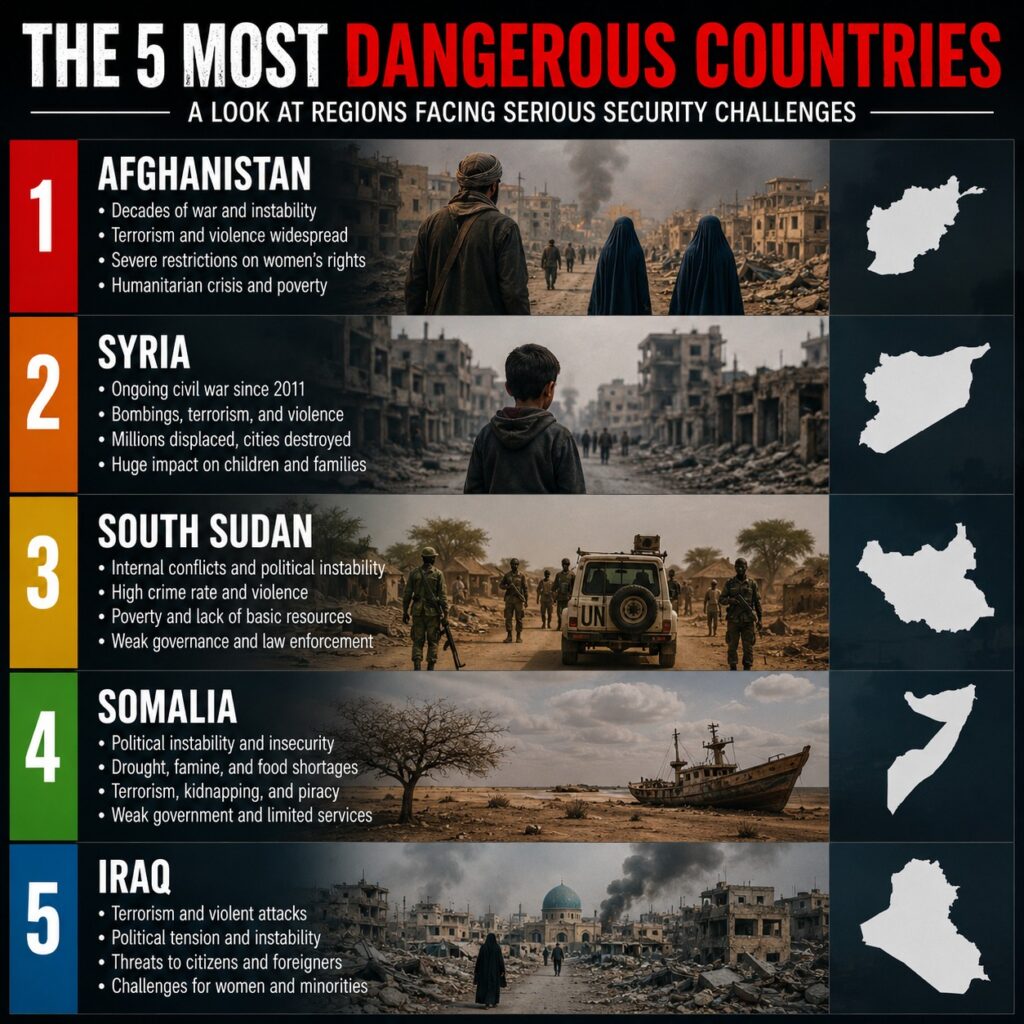
1. Afghanistan
For decades Afghanistan has been a place of armed conflict, political unrest and civilian strife. The years of armed conflict have left the country riddled with destruction, displaced families, and a high number of fatalities.
In many areas of Afghanistan, security concerns continue to be pervasive. The general day-to-day activities of ordinary citizens have been adversely impacted by terrorist acts, armed conflicts and political instability. Many communities are facing difficulties getting access to education, health care, jobs and personal safety.
Women and girls in Afghanistan are experiencing particular hardships due to restrictions on education, employment and participation in society. Human rights groups have expressed concern about the limits on personal freedoms and access to basic services.
Afghanistan remains one of the world’s most dangerous and unstable regions.
2. The nation of Syria has suffered immensely from a prolonged civil war that began in 2011. Since then, millions of people have been displaced due to the war, resulting in significant humanitarian crises and damage to infrastructure.
Cities and regions across Syria continue to suffer from years of violence, which has made recovery exceedingly difficult; and ongoing issues associated with security threats, political instability, and poor economic conditions continue to impact the entire population.
In addition, this brutal conflict continues to place a heavy toll on children, families and their communities. While there has been some progress in certain regions, large areas remain burdened with challenges of safety, rebuilding and accessing basic needs.
Because of these existing issues, Syria is one of the world’s most unstable areas.
3. SOUTH SUDAN
Since it gained independence from Sudan, South Sudan (the youngest country globally) has faced multiple social issues as well as political problems.
Existing instabilities have arisen due to various reasons such as; internal conflict, government instability (including economic instability) etc., – all contribute to creating a problematic political and social environment throughout South Sudan.
Many citizens live in poverty, are unable to access adequate medical care and endure inadequate infra-structure.
Crime and violence (including between tribes) and violence arising as a result of their culture’s history of internal disputes between members of the same tribe etc. have made public safety verydifficult.
Countless humanitarian organizations continue to exist in South Sudan to assist those whom have been negatively affected by violent conflicts and current economic hardships.
To reach a point of peace and stability in South Sudan will require addressing many challenges in regard to creating a consistent, long-term level of safety and stability in the country.
4. Somalia
Somalia has been unstable for decades due to unrest, security issues, as well as environmental issues.
The country has faced many of these environmental challenges through terrorism, armed conflicts, droughts, food shortages, and other examples of humanitarian crises that have affected millions of individuals.
In many parts of Somalia, there have been concerns regarding safety due to armed groups and criminal activity. Therefore, many areas of the country suffer from poor infrastructure, inadequate public services, and a lack of economic growth due to the long-term nature of Somalia’s instability.
Somalia still faces major problems in the areas of security, governance, and economic development, but some communities have made some advancements in these areas since then.
5. Iraq
Iraq has dealt with many years of political instability, acts of terrorism, and internal conflict during its past. The struggles in Iraq have been felt in both urban and rural areas of the country.
While many places have improved since the end of the regime and the onset of the war, some parts of Iraq still have safety issues due to terrorism, political instability and economic hardship, which continues to affect daily life for many people in Iraq.
Women, families, and vulnerable communities face additional social and economic difficulties. Strengthening institutions, improving security, and facilitating the establishment of stable economic conditions will continue to be key issues for the future of Iraq.Despite being rich in history and culture, Iraq is still working toward long-term peace and stability.
Conclusions
The examples given in this article show that all four of these nations continue to face challenges related to conflict and terrorism; the three above represent just some of the challenges that face Iraq as it seeks to achieve peace, stability, and security. While it is easy to focus on the headlines that dominate the news in Iraq and other countries where there have been armed conflicts, it is equally important to remember that there are many regular Iraqi citizens doing all they can to create a better future for themselves and their children. Therefore, international assistance in the form of development aid; humanitarian assistance; and the promotion of democratic governance will continue to be very important as Iraq works toward rebuilding itself, creating better conditions for future generations, and creating more stable countries in the region.