
Solo Traveler Guide: Safety Tips for Exploring Europe Alone
Traveling solo through Europe is one of the most freeing experiences you can have — but staying safe requires a bit of preparation and street smarts. Here’s a practical guide to help you travel confidently on your own.
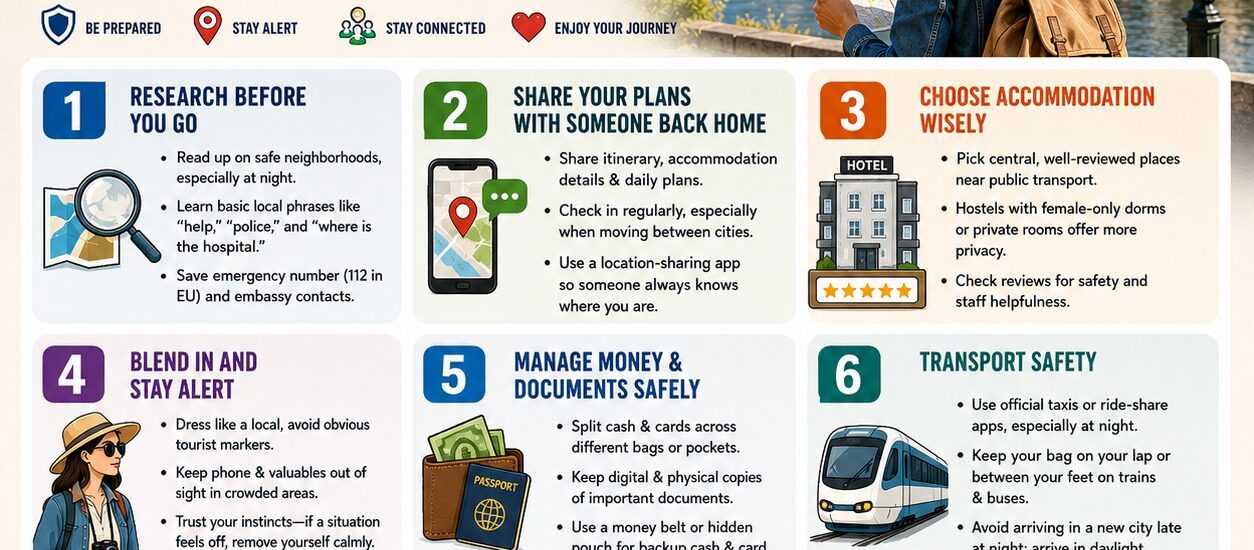
1. Research Before You Go
- Read up on the neighborhoods you’ll be staying in — check which areas are considered safe, especially at night.
- Learn a few basic phrases in the local language, including “help,” “police,” and “where is the hospital.”
- Save the local emergency number (112 works across the EU) and your embassy’s contact details.
2. Share Your Plans with Someone Back Home
- Share your itinerary, accommodation details, and daily plans with a friend or family member.
- Check in regularly, especially when moving between cities.
- Use a location-sharing app so someone always knows roughly where you are.
3. Choose Accommodation Wisely
- Pick centrally located, well-reviewed places — proximity to public transport matters more than saving a few euros.
- Hostels with female-only dorms or private rooms with good locks are worth the extra cost for solo travelers who want more privacy.
- Check reviews specifically for comments about safety and staff helpfulness.
4. Blend In and Stay Alert
- Dress like a local where possible — avoid obvious tourist markers like large cameras around your neck or maps held out in the open.
- Keep your phone and valuables out of sight in crowded areas like train stations and tourist attractions, which are common pickpocketing spots.
- Trust your instincts — if a situation or person feels off, remove yourself calmly.
5. Manage Money and Documents Safely
- Split your cash and cards across different bags or pockets instead of keeping everything in one place.
- Keep digital and physical copies of your passport, ID, and important documents stored separately.
- Use a money belt or hidden pouch for backup cash and a spare card.
6. Transport Safety
- Book official taxis or ride-share apps rather than hailing random cars, especially late at night.
- On trains and buses, keep your bag on your lap or between your feet, not on overhead racks where you can’t watch it.
- Avoid arriving in a new city very late at night if you can help it — arriving in daylight makes it easier to get oriented.
7. Socialize Safely
- Meeting other travelers at hostels or through group tours is a great way to combat loneliness — just verify people through the accommodation or platform rather than random street invitations.
- If going out at night, let someone know where you’re headed and set a rough time to check back in.
- Keep an eye on your drink at bars and don’t leave it unattended.
8. Handle Health and Emergencies
- Get travel insurance that covers solo medical emergencies and trip interruptions.
- Carry a basic first-aid kit and any regular medication with a doctor’s note if needed.
- Know the location of the nearest hospital or pharmacy in each city you visit.
9. Digital Safety
- Avoid oversharing your live location on social media — post photos after you’ve left a place, not while you’re still there.
- Use a VPN on public Wi-Fi to protect your personal data.
- Keep your phone charged with a portable power bank, especially useful if you need to call for help.
Bottom line: Solo travel in Europe is very safe for those who stay prepared, alert, and connected. A little planning goes a long way toward making the trip both safe and unforgettable.