
Best Credit Cards for Travel in Europe (No Foreign Transaction Fees)
Here’s a number that annoys people every single time they see it on their statement: 3%. That’s the standard foreign transaction fee most regular credit cards quietly charge on every single purchase you make abroad. Spend €3,000 over a two-week Europe trip — hotels, dinners, that leather jacket in Florence — and you’ve just handed your bank an extra €90 for absolutely nothing. The fix is almost embarrassingly simple: carry a card that doesn’t charge this fee at all. Here’s what to actually look for, and which cards keep showing up as the strongest picks.
Why the Foreign Transaction Fee Matters More Than You Think
A foreign transaction fee is a surcharge — usually around 3% — added by your card issuer any time you make a purchase in a currency other than your home one. It applies whether you’re tapping your card for a coffee in Rome or booking a hotel online in euros before you even leave home. It’s separate from Dynamic Currency Conversion (a different trap altogether — always decline that at the terminal), and it applies quietly in the background regardless of what exchange rate you’re getting.
Over a full trip, this adds up fast. It’s genuinely one of the easiest wins in travel spending: swap the card, and the savings happen automatically on every purchase, with zero extra effort once you’ve made the switch.
What to Actually Look For in a Travel Card
Before comparing specific cards, it helps to know which features matter for international spending specifically:
- No foreign transaction fee — the non-negotiable baseline.
- Visa or Mastercard network — both have wider acceptance across Europe than American Express or Discover, which can get awkward at smaller shops, cafés, and rural establishments.
- Competitive exchange rate handling — most major issuers use rates within a fraction of a percent of the real wholesale rate, but it’s worth double-checking.
- Travel perks that fit your trip — things like airport lounge access, travel insurance, or Global Entry/TSA PreCheck credits matter more if you travel often; they’re dead weight if you don’t.
- Annual fee vs. actual value — a premium card’s perks are only worth it if you’ll actually use them. For an occasional traveler, a simple no-annual-fee card often wins on pure math.
Strong Picks by Traveler Type
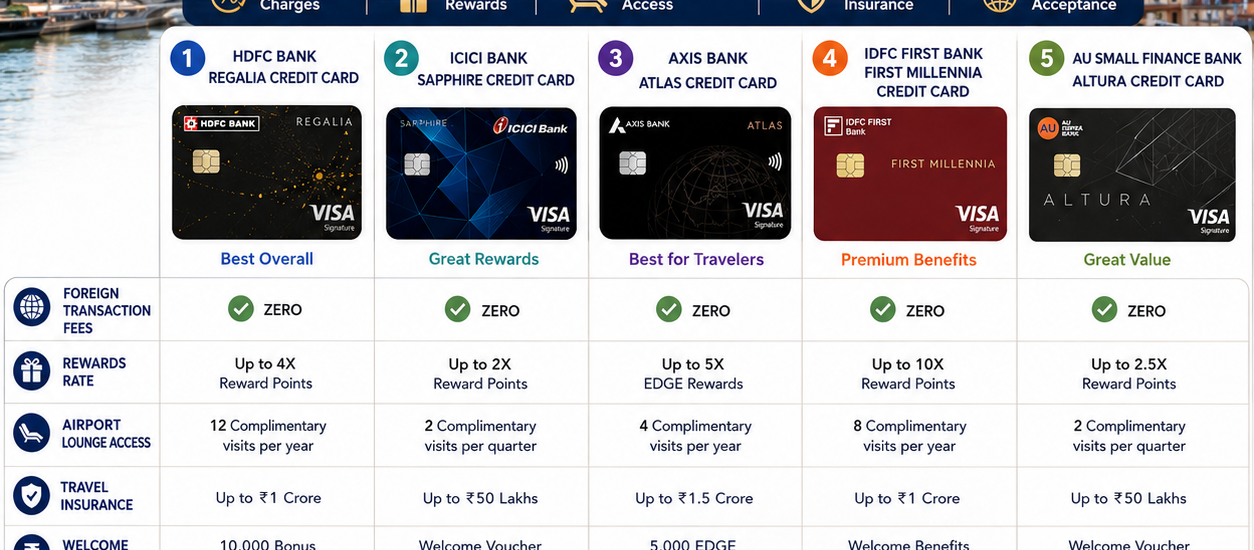
For occasional travelers who just want to avoid the fee: A no-annual-fee card that waives foreign transaction fees is usually the smartest starting point. Cards like the Capital One Quicksilver or Capital One VentureOne consistently show up in this category — no annual fee, no foreign transaction fee, and straightforward flat-rate rewards on everyday spending. You’re not chasing complicated point systems; you’re just avoiding an unnecessary charge.
For frequent travelers who want real rewards: The Capital One Venture Rewards Credit Card and Chase Sapphire Preferred are the two names that come up again and again in this space. Both waive foreign transaction fees entirely and pair that with genuinely useful travel rewards — think transferable points to airline and hotel programs, solid earning rates on travel purchases, and in some cases built-in travel insurance that can actually save you money if something goes wrong mid-trip.
For a simple, no-annual-fee middle ground: Cards like the Wells Fargo Autograph and Bank of America Travel Rewards are worth a look if you want no annual fee and no foreign transaction fee, without needing a premium card’s higher spending commitment. They won’t out-earn a premium card on rewards, but they cost nothing to carry and quietly do their job on every international swipe.
For cash-back over points: If juggling a points system isn’t your thing, the Discover it Miles card is a straightforward option — no foreign transaction fees, flat-rate rewards, and simplicity over complexity.
A Few Practical Notes Before You Apply
- Foreign transaction fees are separate from ATM withdrawal fees. A no-foreign-transaction-fee credit card handles purchases; check separately whether your bank charges extra for cash withdrawals abroad.
- Carry a backup card. American Express has decent acceptance in major European cities but can still be hit-or-miss at smaller businesses, so a Visa or Mastercard as backup is a smart move regardless of which primary card you carry.
- Pay your statement in full. None of these savings matter if you’re paying interest on a carried balance — that erases any fee savings instantly.
- Card availability depends on where you bank. Everything above reflects commonly available US-issued cards; if you’re banking outside the US, look for the equivalent no-foreign-transaction-fee options from your own country’s major issuers — the same core features (no FX fee, Visa/Mastercard network, reasonable annual fee) still apply as your filter.
Bottom Line
The single biggest lever here isn’t picking the “best” card on some ranking list — it’s simply making sure whatever card you pack doesn’t charge a foreign transaction fee at all. Everything else — points, perks, lounge access — is a nice-to-have layered on top. Get the fee-free baseline right first, and the rest is just picking the flavor of rewards that fits how you actually spend.
This is general educational information, not personalized financial advice — card terms, fees, and rewards change, so check the issuer’s current terms before applying.