
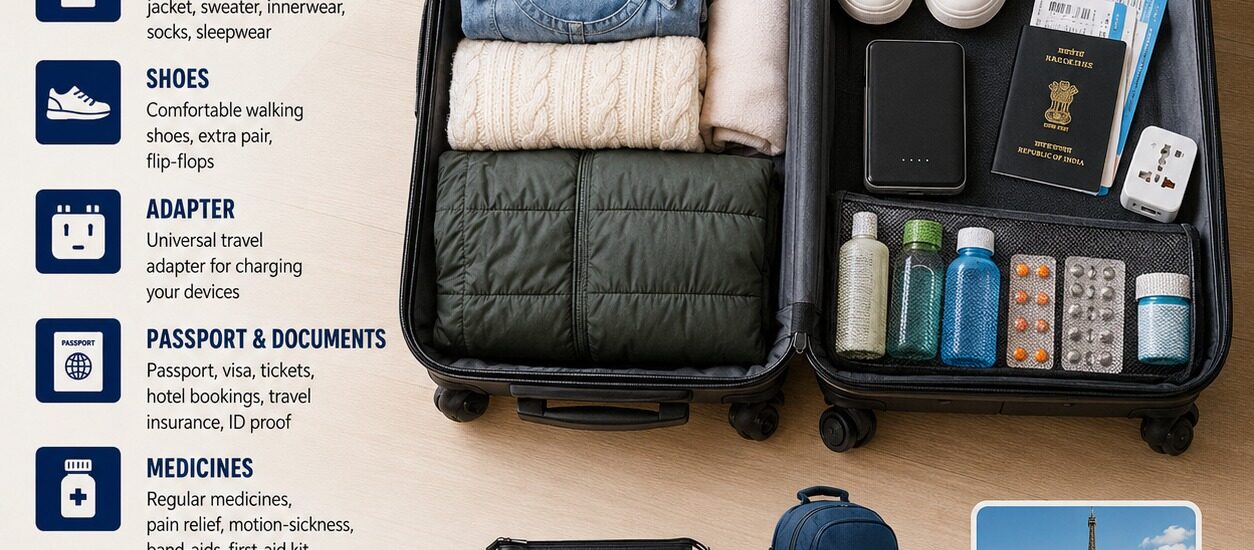
Planning your first trip to Europe can be exciting, but packing for multiple countries, different weather conditions, and long travel days can be confusing. A well-organized suitcase can make your journey much easier and more comfortable.
Whether you are visiting Paris, Switzerland, Italy, or multiple European countries, this Europe packing guide covers the essential things you should carry.
1. Clothes for Your Europe Trip
Pack clothes according to the season and the countries you are visiting. Europe can have changing weather, so carrying layers is always a smart choice.
Essential Clothing:
- T-shirts and comfortable shirts
- Jeans or trousers
- Light jacket or sweater
- Warm jacket for winter destinations
- Comfortable innerwear and socks
- Sleepwear
- One smart outfit for restaurants or special occasions
- Lightweight rain jacket or umbrella
Tip: Avoid carrying too many clothes. Choose items that can be mixed and matched to create different outfits.
2. Comfortable Shoes
You may walk a lot while exploring European cities. Comfortable footwear is therefore one of the most important things to pack.
Carry:
- Comfortable walking shoes or sneakers
- One extra pair of shoes
- Flip-flops or lightweight slippers
If you are visiting Switzerland or other mountainous areas, consider packing suitable shoes for hiking or outdoor activities.
3. Universal Travel Adapter
European countries commonly use different plug types from India. A universal travel adapter can help you charge your phone, laptop, camera, and other electronic devices.
Before your trip, check the voltage requirements of your devices and make sure your chargers are compatible.
4. Passport and Important Documents
Your passport is the most important document on an international trip. Keep it somewhere safe and easily accessible.
Carry:
- Passport
- Visa and travel documents
- Flight tickets
- Hotel booking confirmations
- Travel insurance documents
- Driving licence or international driving permit, if required
- Copies of important documents
It is also a good idea to keep digital copies of important documents on your phone or secure cloud storage.
5. Medicines and Personal Essentials
Carry the medicines you normally need during your trip. Keep them in their original packaging and carry prescriptions when necessary.
Your travel medicine kit can include:
- Regular prescription medicines
- Basic pain or fever medicine
- Motion-sickness medicine
- Band-aids
- Basic first-aid supplies
- Personal hygiene products
Check the rules of the countries you are visiting before carrying prescription or restricted medicines.
6. Camera and Photography Gear
Europe has plenty of beautiful places to photograph, from historic streets in Paris to the mountains and lakes of Switzerland.
If you are carrying a camera, consider packing:
- Camera body
- One or two suitable lenses
- Extra batteries
- Memory cards
- Camera charger
- Protective camera bag
If you prefer travelling light, a good smartphone camera may be enough for most sightseeing.
7. Power Bank
A power bank is extremely useful during long sightseeing days. Your phone may be needed for Google Maps, tickets, translations, hotel information, and communication.
Keep your power bank in your carry-on or hand baggage, and check your airline’s current rules regarding battery capacity and carriage.
8. Toiletries and Personal Care Items
Pack travel-sized toiletries to save space in your suitcase.
Useful items include:
- Toothbrush and toothpaste
- Face wash
- Shampoo and conditioner
- Deodorant
- Moisturizer
- Sunscreen
- Comb
- Shaving or grooming essentials
If you are travelling with only cabin baggage, follow the airline’s liquid restrictions.
9. Small Travel Accessories
A few small accessories can make your Europe trip much more convenient.
Consider packing:
- Sunglasses
- Reusable water bottle
- Small day backpack
- Travel lock
- Laundry bag
- Neck pillow
- Earphones or headphones
- Small umbrella
- Zip-lock or organizer bags
A small backpack is particularly useful for carrying your phone, passport, wallet, power bank, water bottle, and other daily essentials.
10. How to Organize Your Suitcase
Instead of putting everything randomly inside your suitcase, organize your belongings into separate sections.
Keep clothes together, shoes in shoe bags, electronics in an easily accessible section, and important documents in your hand baggage.
A simple organization can look like this:
Main Suitcase
- Clothes
- Shoes
- Jacket
- Toiletries
- Small accessories
Carry-On Bag
- Passport
- Travel documents
- Phone
- Camera
- Laptop
- Medicines
- Power bank
- Wallet
This makes it much easier to find important items during airports, train journeys, and hotel check-ins.
Europe Packing Checklist
Before leaving India, make sure you have checked the following:
☐ Passport and visa
☐ Flight tickets
☐ Travel insurance
☐ Hotel bookings
☐ Clothes
☐ Comfortable walking shoes
☐ Universal travel adapter
☐ Phone and charger
☐ Power bank
☐ Camera and accessories
☐ Medicines
☐ Toiletries
☐ Sunglasses
☐ Small backpack
☐ Important document copies
Final Tips for Packing for Europe
The best Europe packing strategy is to pack light and pack smart. You may travel by flights, trains, buses, and metro systems, so carrying a heavy suitcase can quickly become inconvenient.
Choose versatile clothes, comfortable shoes, essential electronics, and important documents. Keep your passport, medicines, electronics, and valuables in your carry-on bag rather than your checked luggage.
With a properly organized suitcase, you can spend less time worrying about your luggage and more time enjoying your Europe adventure.
Pack smart, travel light, and get ready to explore Europe!